
Roll & Release Explained

Updated: Jan 15

What Is Self-Myofascial Release?
Ever feel like your muscles are wrapped in duct tape instead of silk? That’s your fascia talking — the connective tissue that surrounds every muscle, organ, and bone. When it gets sticky or tight, your body feels tense and tired.
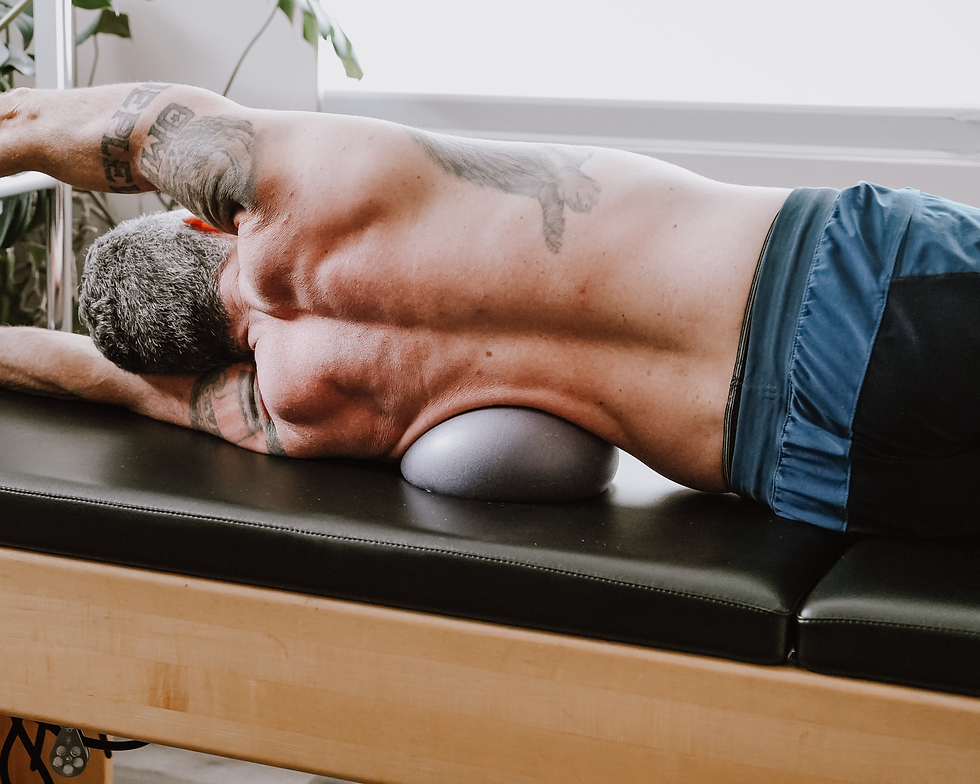
Self-Myofascial Release (SMR) is a hands-on (literally!) way to melt tension using therapy balls, rollers, or other tools. It’s self-massage that works — science-backed, nervous-system friendly, and weirdly satisfying.
In fact, researchers like Skinner et al. (2020) have shown that rolling can significantly increase range of motion, reduce soreness, and help muscles recover faster — without compromising strength. Translation: you’ll move better and hurt less, and that’s a scientific fact.
You don’t need to be a pro athlete — just willing to roll around on the floor for a few minutes and breathe.
Why Roll? Because It Works.
Loosen up tight muscles — SMR increases flexibility and range of motion (and yes, Skinner et al., 2020 proved it).
Reduce soreness — studies show up to 50% less post-workout pain when you roll before or after exercise.
Calm your nervous system — rolling activates your body’s “rest and digest” response, lowering stress and tension.
Boost performance — science-backed protocols show that regular SMR enhances recovery and helps you move better, longer.
Improve posture — release the tight spots that pull you out of alignment.
Enhance circulation and lymph flow — rolling helps move stagnation out of the tissues and bring in fresh oxygen and nutrients.
Relieve everyday stress — gentle rolling can ease tension headaches, jaw clenching, and the “I’ve-been-sitting-too-long” ache.
Regulate your nervous system — mindful rolling helps your body shift from “fight or flight” to “rest and restore.” You’ll feel more grounded, centered, and balanced — from the inside out.
Soothe those post-workout aches — foam rolling has been shown to ease delayed-onset muscle soreness (DOMS) and keep you moving happily (see studies on DOMS relief, 2024). Basically, you’ll be able to sit down after leg day without swearing.
My Roll & Release Philosophy
This isn’t the “no pain, no gain” kind of rolling. My Roll & Release philosophy is all about curiosity, compassion, and precision — and yes, it’s science-backed too. Researchers have found that even short rolling sessions can reduce muscle tension, improve tissue glide, and support nervous-system regulation.
Listen, don’t fight. If your breathing stops — you’ve gone too hard. Gentle pressure wins.
Layer your approach. Broad rolling + pinpoint holds = maximum release.
Move with awareness. Add small motions, wiggles, or stretches while rolling to integrate change.
Map your body. Learn where your fascia tends to tighten, and how it connects to the rest of you.
You’ll leave knowing how to listen to your body — and how to get it to listen back.
What You’ll Learn in My Workshop
Easy, repeatable techniques using therapy balls and rollers.
How to “reset” your tissues in 10 minutes a day.
Simple breathing patterns that make the work more effective.
How to build a home rolling routine for recovery, mobility, and calm.
When to roll, when to rest, and how to make it feel good (not like torture).
Every move I teach is rooted in science — tested, safe, and effective — so you can trust the process and feel confident in what you’re doing.
How to Roll Like a Pro (or at Least FEEL like One)
Grab a tool. Foam roller, therapy ball, or even a tennis ball.
Find the spot. Slow down and hunt for that “hurts so good” zone.
Breathe. No breath-holding allowed — this is chill work.
Stay 30–90 seconds. Maybe add a little rocking or gentle motion.
Move again. You’ll feel the difference — promise.
* Pro tip: If the pressure feels too intense on the floor, take your balls to the wall. You can hit almost every area there — and the wall gives you more control and comfort while still getting great results.
Who It’s For
Anyone in Salt Lake City who feels tight, tense, or “stuck.”
Movers, shakers, and desk-sitters alike.
People recovering from workouts, stress, or just life.
Humans who want to feel better in their bodies — fast.
The Bottom Line
Self-myofascial release isn’t just about “fixing” tight spots — it’s about creating a kinder, smarter relationship with your body. And it’s not a trend — it’s scientifically proven (Skinner et al., 2020; Foam Rolling & DOMS Studies, 2024) to improve movement, mood, and recovery.
In this workshop, you’ll roll, laugh, breathe, and leave feeling lighter, looser, and more alive — ready to move through life with a little more glide and a lot less grind.
Hillary Ann is a Pilates instructor and movement specialist in Salt Lake City, Utah.


Comments